
Vertebroplasty


Transpedicular spinal fixation system
Neurosurgery is a relatively new, dynamically developing branch of medicine. Its tasks are the diagnosis and treatment (including surgical) of various diseases, injuries of the central and peripheral nervous system, and their consequences.
The main proportion of patients who turned to a neurosurgeon were patients with back pain.
The vast majority of them are long-term, sometimes unsuccessfully treated by doctors of various specialties with osteochondrosis of the spine.
This disease is one of the most common in the world. Affecting young and middle-aged people, osteochondrosis of the spine is accompanied by excruciating pains in the neck, thoracic or lower back, often takes on a chronic character and leads to various complications (deforming spondylosis, herniated discs, segmental instability of the vertebrae, development of weakness in the muscles of the limbs, etc. ).
Prevention of the development of these complications is a well-conducted timely examination, including highly informative methods (computed tomography and magnetic resonance imaging). The neurosurgeon, having examined a patient with chronic back pain, determines the list of necessary examinations, and then the patient’s treatment tactics are conservative, including drug therapy, physiotherapy, massage and physiotherapy, or surgical.
In recent years, minimally invasive interventions on the spine (vertebroplasty) are widely used.
Vertebroplasty is a surgical intervention that is performed to strengthen the damaged vertebral body by introducing a special plastic - bone cement. In most cases, this operation is performed with compression fractures of the vertebrae, not complicated by compression of the nerve structures. Such fractures most often occur with osteoporosis, hemangioma, traumatic back injury, metastases in the vertebrae and other tumors of the spinal column.
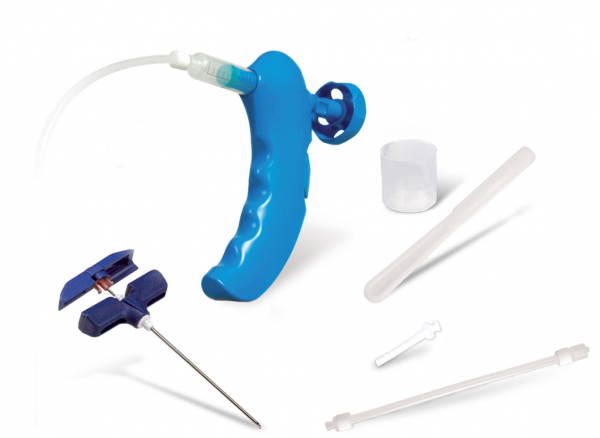
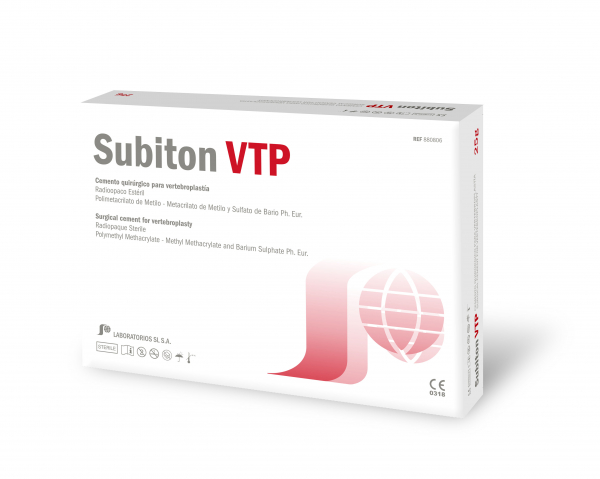
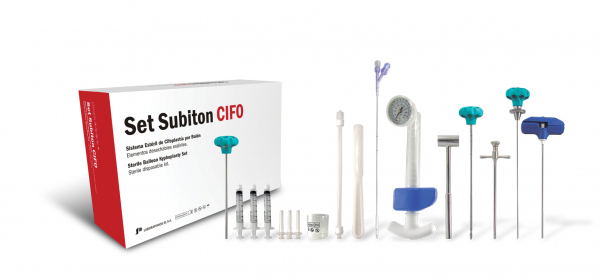
The introduction of bone cement into the vertebral body is carried out through a special needle, control over the manipulations is carried out using x-ray. Recently, surgical techniques based on the use of bone cement (PMMA - polymethylmethacrylate) are increasingly used in various pathologies affecting the spinal column.
Initially, the technique of percutaneous vertebroplasty was proposed in 1984 for the treatment of aggressive hemangiomas of the vertebrae. Currently, this method is a minimally invasive method of surgical treatment of primary and metastatic neoplasms with the existing threat of a pathological fracture. In addition, this method is widely used for osteoporosis and compression fractures of the vertebrae, which are associated with this pathology. It should be noted that such fractures cause severe pain and lead to a significant limitation of back mobility.
The essence of the technique is that the surgeon inserts a metal needle into the body of the damaged vertebra through which a special mixture is injected (under computed tomography and fluoroscopic control). The mixture consists of bone cement based on PMMA, a contrasting material and an antibiotic. The introduction of the specified needle into the vertebral body in case of pathologies of the lumbar and thoracic level is carried out transpedicularly, while for pathologies of the cervical level, anterior lateral access is used.
The hardening rate of PMMA and the duration of its stay in a pasty state is the most important characteristic of bone cement - this is due to the fact that it is during this period (6-11 minutes) that the surgeon must inject the substance and fill it with a fracture / pathological cavity. By polymerizing, bone cement is heated to a temperature of 70 ° C, providing support for the body of the damaged vertebra and exerting a cytotoxic effect on the cells of the pathological neoplasm. Stiffening, the injected cement strengthens the vertebral body, which allows not only to effectively treat the effects of compression fractures of the spine caused by osteoporosis, but is also used to treat pain caused by tumor metastases in the spine or hemangiomas of the vertebral bodies.
Indications
Vertebroplasty most often requires vertebral hemangiomas with signs of aggressiveness. The criterion for assessing the aggressiveness of this pathology is intense back pain that intensifies with physical exertion, combined with damage to the chest level of most of the vertebral body and the cellular structure detected by MRI or CT.
The main indication for the operation is traditionally pain in the back, localized at the level of the lesion. Also, percutaneous vertebroplasty is often necessary for pathological fractures of the vertebral bodies or the threat of their occurrence, which occurs in the absence of compression of the nerve roots of the spinal cord due to metastases or osteoporosis and maintaining the height of the body of the affected vertebra by more than 1/3. Along with the reduction of pain and restoration of support functions, the introduction of bone cement in the secondary metastatic lesion of the spinal column has a cytotoxic effect.
The procedure is characterized by a high level of efficiency. The authors of the statistical study say that in 38 patients suffering from aggressive hemangiomas, as a result of percutaneous vertebroplasty, almost 90% of the pain regression was obtained. The same research group published the results of percutaneous treatment of 100 patients suffering from metastatic spinal lesions - pain regression occurred in 80% of cases.
In addition to low invasiveness and the possibility of using local anesthesia during the operation, this intervention technique provides for the activation of patients only two hours after surgery - the length of stay in the hospital can be reduced to one day. Reducing the severity of pain, along with the preservation of motor activity, significantly improve the quality of life of patients who underwent surgery. Thus, the technique is increasingly used in the treatment of compression fractures of the spine.
Benefits of the operation
The advantages of percutaneous vertebroplasty include the following:- High efficiency. The targeted and carefully controlled injection of bone cement directly to the location of the fracture or the body of the affected vertebra allows you to effectively strengthen the vertebra and restore the integrity of the damaged bone;
- Small invasiveness. Allows to ensure minimal invasiveness of the procedure, since surgical procedures do not require large-scale surgical incisions;
- Using local anesthesia. This makes the procedure accessible to patients of any age and with any state of health, since local anesthesia does not give as much load on the body as it does with general anesthesia;
- A small number of complications. This point is a consequence of the use of modern instruments and techniques, which avoids damage to adjacent structures to the vertebra by an inserted needle. The minimum length of the incision (several millimeters) significantly reduces the risk of infection, the amount of blood loss, as well as the degree of trauma to muscles and other soft tissues;
- Early activation of patients. The modern technique of vertebroplasty allows patients to actively move around just a few hours after surgery. It takes only a few minutes to harden the drug, which means that a longer restriction of mobility is not necessary;
- Reducing the length of hospital stay. After the operation, the patient needs to stay in the hospital for only one day - in the morning he comes to the hospital on an empty stomach, undergoes surgery and, after several hours, can go home and return to his normal lifestyle.